


The Conversation: New opportunities for women opening up in Orthodox Judaism
By MICHAL RAUCHER
Of Rutgers University
When people picture a rabbi, they may imagine a man standing in front of a congregation in a synagogue.
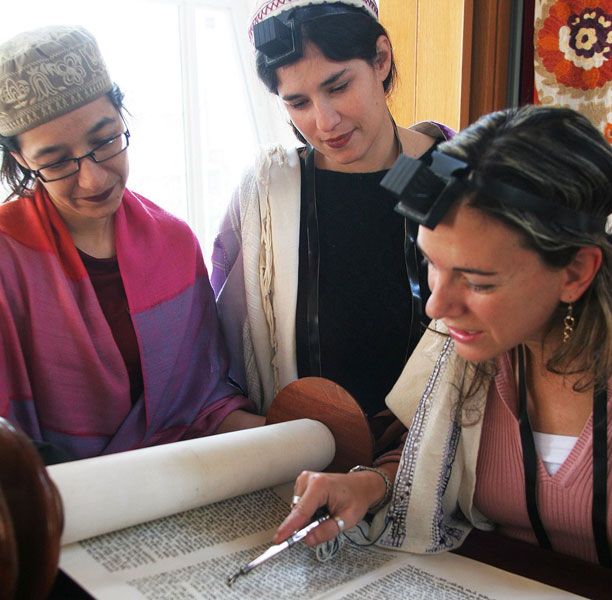
But the term “rabbi” means much more than that. For example, a rabbi could be a teacher, an executive at a Jewish non-profit or a scholar of Jewish law – and, increasingly, some of those roles are being filled by Orthodox women.
More liberal denominations have permitted ordination of women for decades.
Orthodox Judaism has largely prohibited it. But attitudes toward women’s study of rabbinic texts is changing, leading some Orthodox leaders to conclude that women are indeed qualified for rabbinic posts.
Israel’s chief rabbis — collectively making up the Rabbinate, historically seen as the top authority for the country’s Orthodox institutions — do not recognize women as rabbis or permit their ordination. But a significant change came in July, when Israel’s High Court of Justice ruled women must be allowed to take the Rabbinate’s Jewish law exams.
The chief rabbis appealed, but the court rejected their request for a retrial in November.
Passage of these tests is required for public sector jobs as any kind of Jewish religious authority in Israel — ensuring that restaurants adhere to Jewish dietary laws, for example.
Passage alone does not make someone an ordained rabbi. Ordination is conferred through private rabbis and schools, and most Orthodox communities do not open their ranks to women leadership.
But it does allow women to apply for jobs previously available only to men, and to receive higher salaries for educational jobs they already hold. Most importantly, under the High Court’s decision, it recognizes that women have achieved high levels of education in rabbinic law.
I am a scholar of Jewish women and gender who researches religious authority in Orthodox ranks. While there have always been highly educated women, the court’s ruling reflects a growing trend among Orthodox women, and thus opening new professional opportunities for them.
Formed in the 19th century, Orthodox Judaism is oriented around a strict observance of Jewish law and a commitment to traditional gender roles. The denomination contains many divisions, each one adjusting its observance of Jewish law differently in response to modernity.
While boys and men have been traditionally educated in Torah and rabbinic texts, historically, girls and women did not have access to formal Jewish education of that type.
In the early 20th century, teacher Sarah Schenirer revolutionized Orthodox girls’ education by founding the Bais Yaakov school system, originating in Poland but now found in many countries. The Bais Yaakov education focused on teaching women Torah, while still maintaining women’s traditional place in the Jewish home.
But soon another debate arose: whether women could study Talmud.
This text, composed between the second and seventh centuries C.E., contains the building blocks of rabbinic law. Studying the Talmud means learning the language, references and argument style of the Jewish legal system, called “halakha.”
Supporters and opponents of Talmud study for women both argued that it would forever alter orthodoxy. Supporters saw that as a good thing, but opponents feared that if women understood Talmudic discussions, they would step up their participation in public religious life, upsetting the gender norms at the heart of orthodoxy.
In the 1970s, some well-known rabbis in Israel and America began inviting women into Talmud study. Since then, the number of Orthodox institutions offering advanced Talmud study for women has grown significantly.
Fifty years ago, there were only two options: Stern College at Yeshiva University in New York or Michlelet Bruriah in Israel, now known as Midreshet Lindenbaum. Today, however, dozens of institutions offer programs for Orthodox women who want to study rabbinic law.
Institutions where women can learn Talmud and rabbinic law span the Orthodox landscape. Many are affiliated with open or modern orthodoxy, which have embraced changes related to gender roles. Some cater instead to the Haredi or “ultra-Orthodox” population, and others to communities between.
Most students who complete these programs are not seeking traditional ordination as rabbis.
But the studies prepare women for several other types of religious leadership, including teaching posts in Jewish education and service as halakha guides for other women. Some programs also prepare students to answer Jewish legal questions in particular areas, such as practices during menstruation or childbirth.
This growth in opportunities for Orthodox women is the result of a network of Orthodox feminists working across borders.
Michlelet Bruriah was founded by two American Jews who immigrated to Israel in the 1960s. Several other educational institutions developed through this network, including Matan, Nishmat and Drisha, located in Israel.
Yeshivat Maharat, the first Orthodox seminary to ordain women as rabbis, is based in New York. Several of its teachers and students are products of these Israeli institutions, and some of its donors also support the Israeli schools.
The lawsuit challenging the Israeli chief rabbis’ restriction on women taking the Jewish law exam was filed by people in this network, including Rabbi Seth Farber, an American immigrant to Israel and the founder of ITIM, a nonprofit advocating for Jewish religious pluralism within Israeli society.
He was joined in the lawsuit by his wife, Michelle Cohen Farber, another American immigrant to Israel.
She uses the title “rabbanit,” which traditionally refers to someone married to a rabbi. In her case, however, it also refers to her own expertise in Jewish legal texts, as co-founder of Hadran, an organization promoting Talmud study among women.
Other petitioners included another rabbanit — Avital Engelberg, an Israeli-born graduate of Yeshivat Maharat who now heads the seminary’s Israeli branch.
Women’s training allows them to enter a variety of fields.
Opportunities for Orthodox women’s religious leadership are growing, and it’s not all about ordination. “Yoatzot halacha,” for example, counsel other women about issues related to marriage, sex and reproduction.
More broadly, these programs — and the Israeli court’s decision — validate women’s religious leadership.
For decades, many Orthodox Jews have looked to Israel’s Orthodox rabbinate as the arbiter of religious authenticity. The ruling forces Orthodox Judaism worldwide to recognize that women can achieve high levels of Talmudic education.
Finally, the proliferation of educational programs reflects — and creates — a need within orthodoxy.
It is not just a small cadre of women seeking these opportunities. Programs continue to open because there is a demand among Orthodox women for the chance to study rabbinic texts.
As more institutions create programs for women, they are creating a new reality — one where Orthodox women can aspire to religious leadership.
From The Conversation, an online repository of lay versions of academic research findings found at theconversation.com/us.







Comments
fiddler
Paul would be proud, so would Jesus, along with the other Jews of their day.