


Oregon researchers test Christmas tree species
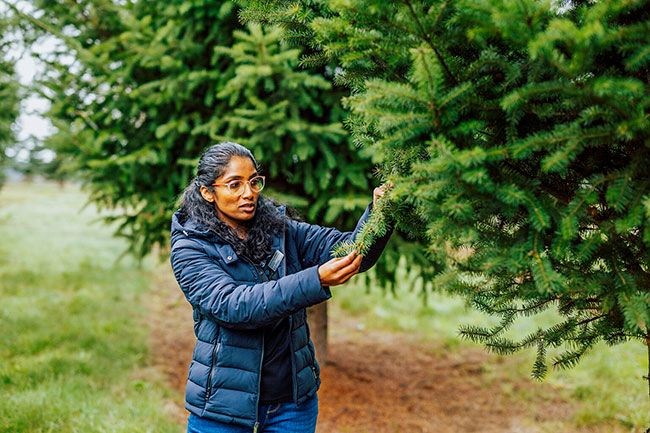
As Oregonians prepare for Christmas, researchers are looking into how they can keep the state’s Christmas tree industry alive for decades to come.
Oregon grows more Christmas trees than any other state in the country, selling 3 million trees in 2023 and contributing $118 million to the state’s economy, according to the most recent federal data available. More than half of those trees are sold in California, with other Western states, Mexico, Canada, Hong Kong, Japan, Panama, Singapore and Maldives among Oregon growers’ top markets, according to the Oregon Department of Agriculture.
The state’s mild summers and wet winters are ideal for growing popular Christmas tree species like the native noble and Douglas firs, but researchers are looking beyond native species to find trees that can withstand hotter and drier conditions.
Priya Rajarapu, an assistant professor and Christmas tree specialist at Oregon State University, works closely with growers and spends much of her time diagnosing sick trees.
“The two most significant problems that we have right now with climate change is one, keeping the seedlings alive after they are transplanted in the field the first year, and two, the older trees are more stressed because there is not enough water, which makes them prone to pests and disease attacks more frequently,” she told the Capital Chronicle.
Rajarapu is researching how species from Eurasia are growing in Oregon — a project that started under her predecessor, Chal Landgren, who collected Nordmann fir and Turkish fir seeds from Georgia and Turkey. Those trees are now growing at a 3-acre site she oversees in Aurora. So far, Rajarapu has found that they are more tolerant to drought and pests, which reduces the need for chemical insecticides.
The species are a growing percentage of Oregon’s crop, and the research supports a vital part of Oregon’s economy that supports seasonal jobs in rural areas, Rajarapu said.
“When you buy a real tree, you’re supporting a local Oregon business, and you should take pride in it, because we are the leading producers of the trees in the country,” Rajarapu said.
Used with permission from Oregon Capital Chronicle. See more at www.oregoncapitalchronicle.com.






Comments