


Four commissioner hopefuls share their visions for the county
POSITION 1
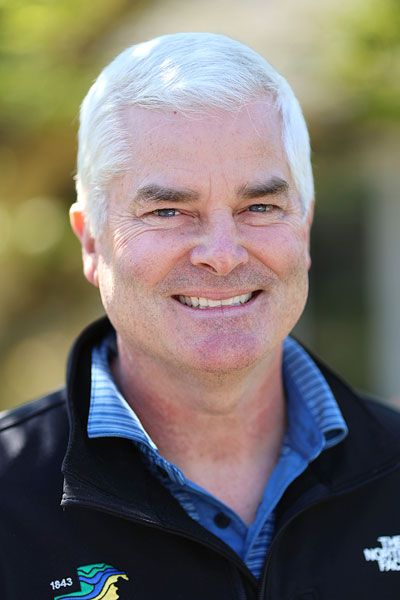
Johnston seeks to continue making connections
With a month and a half before the May 19 election, Johnston told the News-Register he’d put out only about 40 signs so far, all reused from his 2022 campaign.
“We’re 40 some days out, it’s plenty of time. I feel good with what we’re doing,” he said, noting races always seem to come down to the wire regardless of the amount of campaigning. (Johnston has since raised more than $40,000 in contributions.)
In his first campaign, Johnston emphasized connecting with constituents. In his four years on the board, he has been a mainstay at city and county meetings and events. His weekly “Chat with the Chair” gatherings give residents additional facetime, he said, adding that the exposure and his record have garnered endorsements from elected officials across Yamhill County.
He has endorsements from all three local state legislators, Sheriff Sam Elliott, two fire unions and every mayor in the county aside from Amity’s Rachel King; who doesn’t endorse candidates.
“I’m showing the receipts,” Johnston said.
The Dayton High School alumni is a multi-generational farmer who has owned nursery and marijuana growing and retail businesses. Before being elected to the county board, he served on the planning commission.
Johnston recently led the effort to remove the Yamhelas Westsider trail from county plans and remains firm on his position, arguing the hurdles of passing a farm impact test were insurmountable.
“I will fight it to the death,” he said. “You have one farmer that says no, the trail won’t happen. It’s against the law based on farm impact study.”
He believes the county should move forward with other recreation projects while it figures out how to mitigate the $1.7 million owed to the Oregon Department of Transportation, stemming from a grant when the trail was purchased that must be repaid.
“When I’m a ‘no’ on a project, I don’t want to just be a ‘no.’ I want to be a ‘no, but let’s go look at these other projects that we’ve had for decades,’” he said.
He’s advocated for developing a 25-mile bike trail that recently received $3 million in federal funding and believes the county should be developing public access at county-owned Whiteson and Metsker parks.
Those projects could bring pro- and anti-trail residents together to coalesce around work that is different, but in the “same realm,” he said.
To manage the ODOT debt, Johnston wants to sell a portion of the trail to the city of Carlton and a corridor bordering Highway 47 to the state agency.
“I think we need to, absolutely,” he said of selling portions of the trail.
Once those two parcels are sold, Johnston said remaining portions should be appraised and potentially sold to neighbors of the land, with extra money going to the parks fund.
Johnston is against Commissioner Bubba King’s suggestion to add a Transient Lodging Tax in unincorporated areas of the county, calling it “double side taxation.”
Hotels are built with the expectation of attracting tourism and paying property taxes to account for the visitors, he said.
“If the property taxes that they’re paying isn’t enough, then the system is broken,” he said.
A stated priority of his 2022 campaign was finishing the Newberg-Dundee Bypass, and he said he will continue working to secure funding for that to happen. He touts the relationships he’s developed with ODOT representatives to advocate the bypass and other projects, including redevelopment of McDougall corner and the intersection of Lafayette Highway and Highway 18.
He also touts his fiscal responsibility of maintaining the property tax rate while building reserves with no new taxes.
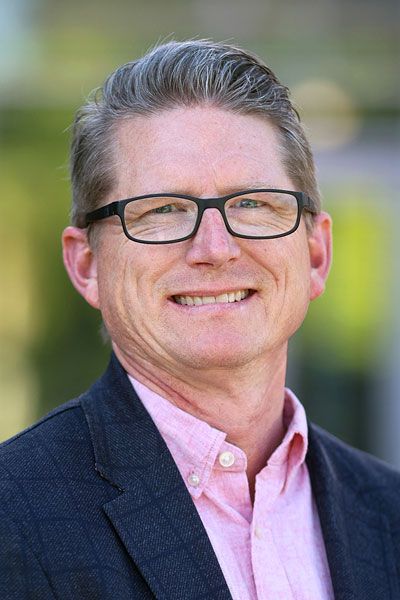
Linder wants to pave new path for county
Yamhill County Board of Commissioners Challenger John Linder says the race against Kit Johnston isn’t about one issue, but he has strong opinions about the Yamhelas Westsider trail.
Linder has spent more than three decades working as a financial analyst and investor. He earned degrees in economics, math and French from Middlebury College, and earned a Master of Accountancy at the University of North Carolina business school. Locally, he has served for five years on the McMinnville School Board Budget Committee.
In an interview with the News-Register, Linder called the recent removal of the trail from county planning documents “unconscionable,” and its potential sale a “vaporization of wealth” for the county.
He railed against the vote of the planning commission “stacked with friends and family” of board members and said the trail was politicized by former Commissioner Lindsay Berschauer — “To divide the county and to get elected,” he said.
The case against the trail is full of red herrings, he said, arguing that remands concerning a farm impacts test shouldn’t have dissuaded its pursuit.
“You’re going to hear from my opponent and outgoing Commissioner (Mary) Starrett that it’s so divisive, it isn’t,” he said, claiming 80% of the county supports the trail. “A remand isn’t saying anything is illegal. A remand is saying you need to fix some things.”
Linder said the plan would go right back on county planning documents if he were elected, and he would begin working with farmers to mitigate the trail’s impact.
“This can absolutely happen,” he said. “If I’m elected, Bubba (King) and I will put it back in the (Transportation System Plan).”
Current plans to sell portions of the trail would remove all the value from the corridor, Linder said, calling it a $100 million asset to the county. “If you take a piece out of the middle of it, it is a zero dollar asset.”
“It’s unconscionable and it’s corrupt,” he said of a sale. “It’s not giving something of value to their campaign donors, it is destroying something of value for the collective county.”
He envisions the trail as an economic driver that attracts visitors from afar and would unlock other tourism pursuits along the Yamhill River.
“You can only drink so much wine,” he said. “You’ve got to have other things to do when you come to Yamhill County.”
Linder said the county needs to allocate more funding to parks and that Johnston’s pursuit of park projects ring hollow when compared to the current parks budget.
“We have a lot in number of county parks, but most of them are very small and most of them are undeveloped,” he said. “We don’t even have the budget to mow the lawn, much less maintain the parks we have.”
Drawing from his professional background, Linder believes the county must set well-defined goals and pursue them through budget measures and enhanced economic development efforts. He is a proponent of pursuing more grants and once again working with Strategic Economic Development Corporation (SEDCOR), whose contract was terminated by the board in 2023. There needs to be better lines of communication with area businesses and a stronger effort to retain them, Linder said.
“We can’t afford to lose any of those businesses, and we need to bring in more of those businesses,” he said.
He supports King’s idea to establish a Transient Lodging Tax in unincorporated areas, saying the proceeds can be used on roads and emergency services, which directly affect tourism.
“All these things kind of work together in promoting tourism in a way that could be a driver of economic development,” he said.
Linder partnered with Position 3 candidate Neyssa Hays on a campaign and advertising materials, saying the pair are more similar than different and adding its cheaper to run as a slate. While the two share similar views on county issues, Linder said he is trying to maintain his own brand.
“Neyssa and I are very different people, we come to this from a very different point of view,” he said.
In his voters’ pamphlet submission, he said, “As County Commissioner, I will focus on practical solutions that strengthen oversight, improve essential services, and ensure county government works effectively for all of us.”
POSITION 3
Hays emphasizes balanced approaches
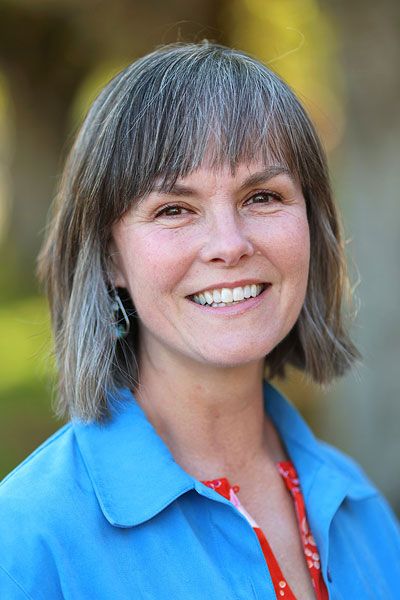
Neyssa Hays said nature is part of her career and education, and she is running for Yamhill County Commissioner on a platform of supporting agriculture and natural resource industries, which she calls the backbone of the local economy.
A lifelong county resident, Hays is the co-founder and finance director for Outdoor Education Adventures, a nonprofit delivering environmental education programs. She studied biology at Oregon State and Portland State universities and chairs the Yamhill County Parks Advisory Board, on which she has served for 10 years.
OEA is one of the few users of Metsker Park, which the county plans to slowly open to the public. Hays told the News-Register she supports the plan and that opening the park is the only way to secure grant funding necessary for maintenance and repairs.
“It needs help; that place needs help,” she said.
She criticized the firing of a grant writer and said the county is inefficient in identifying and applying for state and federal funding. The commissioners’ personnel decision resulted in more work for staff and many missed opportunities, she said. “Sheriff’s captains are writing grant applications instead of doing their full job.”
She is critical of recent appointments to county boards and committees, citing the planning commission she says was stacked with donors and loyalists of Commissioners Mary Starrett and Kit Johnson and former Commissioner Lindsay Berschauer.
Three years ago, the Parks board interviewed and recommended candidates, but commissioners rejected those nominations in favor of others, she said.
“Those people, their backgrounds show that they are the friends and family members and close allies of the Board of Commissioners,” she said. “So, we were angry, but we were more angry because they just didn’t have the qualifications that we were looking for.”
The new members have somewhat assimilated and disagreements now largely center on methods rather than goals, Hays said. The group has been able to move along several projects, including a recently completed parks system plan.
A proponent of the Yamhelas Westsider trail, Hays told the News-Register that selling portions of the 15-mile corridor to private landowners would be short-sighted.
“Selling assets is what you do when you’re desperate, because you can’t get them back once you’ve sold them,” she said.
Even if a trail isn’t developed, the county should retain the land for possible future needs, such as utility placement. “I think the point is holding onto to it for future generations,” she said.
Asked about the balance of preserving rural character and allowing growth, Hays said the county should focus more on promoting industrial and commercial endeavors to avoid small cities becoming bedroom communities.
“We have not been working very hard on growing the businesses that are here ... so that they can employ the people who already live here,” she said.
Hays supports college or vocational pathways and said the county should further support area high schools’ trade programs.
“Our high schoolers graduate and they’re not ready to go work in the businesses that exist,” she said. “I think that that’s a real missed opportunity that we should be taking advantage of.”
The trend toward bedroom communities leads to more traffic, she said, and while tourism adds to the economy, it shouldn’t be the only option. “In order to have a stable economy you need to have a very diverse economy.”
Hays supports the recent passage of a state bill that creates a farm store permit for land zoned exclusive farm use but worries big spenders will take advantage of the legislation.
“My concern with the way that that bill was written is that you could have a 300-acre farm and as long as you farm 80 acres of it, the rest of it could be a playground,” she said.
A wealthy investor could purchase a large property under the auspice of farming and turn most of it into a tourist destination. “With anything you can have too much,” she said of tourism offerings.
She agreed the fairgrounds needs a lot of work and likely a new eventual home but cautioned against selling the land before a plan is fully developed.
“I wouldn’t be opposed to us having a new facility … somewhere, I just think that selling the old one before you have really solid plans … (is) putting the cart before the horse,” she said, adding it would be devastating for 4-H youths to not be able to show and sell livestock because there was no fair during a transition period.
Fields promotes ideas for county growth
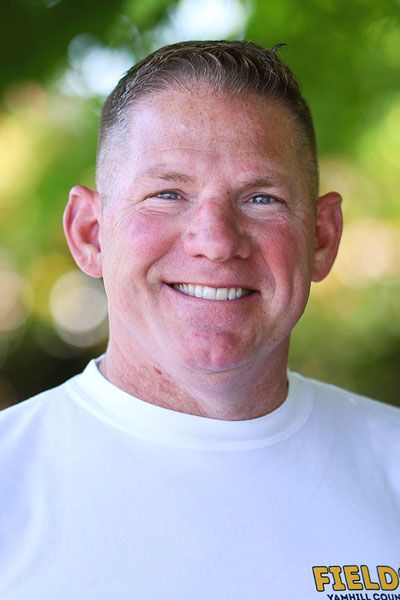
Board of Commissioners candidate Jason Fields has big plans for Yamhill County, including a new park and amphitheater, but preserving the current way of life is the core of his campaign.
“Most people want the best for their family, they want their families to do well, they want to be able to raise them here and they’re hoping their kids won’t move away when they get older because they can’t afford to live here. That is what I want to protect,” Fields told the News-Register.
“I want to make Yamhill County safe, affordable and thriving, that’s what I want to do.”
A small business owner and member of the county’s budget committee and Chehalem Park & Recreation District Board — and longtime country music singer — Fields said running for office is his way of giving back to the community. Yamhill County is more affordable than surrounding counties, he said: “I want to keep it that way.”
Fields grew up in Portland and graduated from Rex Putnam High School. After a career in selling commercial printing, he went into business for himself. He works as an independent contractor selling tow trucks and has developed a business of manufacturing and selling custom parts for Volkswagens — an image used on his campaign materials.
He wants to build an amphitheater along with a relocated fairgrounds to generate revenue for the county. He said the county could sell the current fairgrounds to private developers for housing, conduct a land swap with Dayton for a new site and use grants and private investors along with the land proceeds to construct an amphitheater.
“I want to build an amphitheater here in Yamhill County, something that is owned and operated by the residents of Yamhill County, so that all the profits that come in ... can be used to help pay for the services Yamhill County provides,” he said.
Another idea is to convert a former Newberg landfill to a biking park with storage for Sheriff’s Office boats. The county could lease the property for $1, and a private company has already said they will design and infill the park for free in exchange for accepting dirt, Fields said.
The CPRD is currently considering the option, he added.
Other ideas include developing parkland into campgrounds to generate revenue and making changes to have proceeds from traffic tickets remain in the county, rather than going to the state.
Growth was a term used repeatedly by Fields. The county should continue to allow commercial growth, such as wineries in rural areas, and cities need to incorporate more industrial land to keep jobs local he said.
“I intend to be a growth commissioner,” he said. “I believe if you are not growing, you are dying, and we’ve got to do what we can to bring people to Yamhill County and spend their money.”
On the controversial Yamhelas Westsider trail, Fields said he would love to see such a trail and appreciates the community’s passion on the topic, but he believes it as currently conceived has no chance of passing state legal tests.
“It won’t pass land use, okay, it is what it is,” he said.
He said he has knocked on 10,000 doors to discuss campaign issues, and only a handful of people asked about the future of the trail.
“You know what people are interested in? ‘Why can’t my sixth grader read?’ ‘How come my twin girls, how come they can’t add?’ They talk about moving out of Yamhill County (because) people can’t afford to live here. We’ve got senior citizens skipping meals because they can’t afford gasoline, they can’t afford their rent, they can’t afford their prescription drugs,” he said.
Residents in Lafayette and Carlton struggle with electric prices, those in Newberg and McMinnville say they can’t handle another bond measure and Sheridan residents struggle in a food desert, he said.
To help alleviate those issues, Fields pledged to not raise taxes or introduce any new ones.
“No such thing as a tax that doesn’t hurt somebody,” he said.
Wall joins others at candidate forum
Newberg resident David Wall has become a perennial county commissioner candidate but has never actively campaigned for a position. He has never accepted an invitation from the News-Register for an interview.
However, he appeared at a candidate forum in Newberg on April 22, hosted by the McMinnville Area and Chehalem Valley chambers of commerce.
Wall said he’s running for commissioner because “this entire county is falling under the auspices of being destroyed.”
He repeatedly criticized continuous developments and said Yamhill County will join its neighbors in being “slaves to Portland.”
“I believe in protecting the farmlands and forestland that make Oregon great,” he said. “Unbridled growth should not occur until the infrastructure can attain it.”
He said Newberg is being destroyed and described McMinnville as “the vortex of a swirling toilet bowl,” later adding he thinks the proposed McMinnville Landing development will be a mess.
Before moving to Oregon, Wall said he worked for Santa Clara County in California as an animal control officer and retired from a position with the city of San Jose’s sewage treatment plant. According to the voters’ pamphlet statement, he earned a degree in chemistry from San Jose State University.
The candidate forum can be viewed on the McMinnville Community Media YouTube page.






Comments
manyhands
Please read Liesl Forve's letter to the editor in the April 24 News Register explaining how Kit and Jason are taxing you. And don't forget, Kit and Jason are not for the people. In October Kit voted to remove public land - the Yamhelas Westsider Trail - from the county's transporation system plan. Citizens at the meeting called his process "sneaky." The removal item was added following initial agenda publication. No information on the item was included in the meeting packet. CC Bubba King voted no on the item. He said YC citizens should decide what they want to do with their public land. In 2023, newly elected Chehalem Park and Recreation board member Jason voted down a footbridge that would allow access to 11 acres of Park and Rec land at Ewing Young Park in Newberg. At a CPRD meeting, Fields snarled to longtime CPRD Superintendent Don Clements, "I'm telling you, Don, the moment we get elected and sworn in, that bridge idea is dead, OK? I want to be clear about that. That bridge idea is dead...I'm not in charge right now, but I'm telling you for sure we are going to kill the bridege idea." Why such viscious opposition from a new board member who is supposed to support -not abort - park projects? Because approval of the bridge could lead to approval of other bridges and trails in YC and some of Jason's big-money campaign contributors are adamantly opposed to one trail in particular - the Yamhales trail. YC citizens and businesses in both cases have indicated repeatedly they want the trail and the bridge.
CubFan
Hays certainly has a well-rounded background in anything related to parks. However, the County Commissioner position requires MUCH more than that. Listening to her in a candidate debate, she is meek and doesn’t present her case well. I’m not convinced she has a grasp of how much work is involved in the commissioner position. Aside from all of that… she is supported by both Livability Oregon and Progressive Yamhill… both of which are LIBERAL groups. I don’t want to see Yamhill County to become a “Portland JR”. Vote for Jason Fields.
Otis
Independants agree that any candidate that also supports politicians with pedophillic/corrupt tendencies is a disqualifying issue.
Lulu
Well, I can certainly understand why Wall declined to debate in the past. "Vortex of a swirling toilet bowl."
Ugly statement.
Drew
Please, please, please! Anyone voting in this election, do your research and at least watch the candidate debate! You can find em on YouTube or through McMinnville Community Media https://youtu.be/Ez027W5MMXs?si=pNZ9e2iVnR9DlnIi
Bigfootlives
Pedophile/corrupt tendencies..? Biden is not running for CC.
Mona Ellison
Hey, Bigfootlives - have you received your Trump phone yet? LOL!