


Eric Schuck: Loving our neighbors with no buts about it

Sometimes it was a layered salad — in the good Tupperware, mind you — observed in the fridge but never materializing on the table. Other times, it was a plate of cookies, spotted cooling on the counter, but never to be seen again.
As my grandparents aged, the food miraculously went the other direction — for example, a cache of hot dishes magically arriving in moments of need. It made no sense.
However, in college, I put it all together. In assuming driving duties for my grandmother’s trips to church from my grandfather — he was arguably happier about my driver’s license than I was — the truth revealed itself.
My grandmother was part of a secret society, a syndicate of sympathy and conspiracy of kindness, radically committed to basic decency. My grandmother was a member of the Lutheran Basement Women.
Living out Martin Luther’s observation, “God does not need your good works, but your neighbor does,” the LBW may represent the true foundation of the church — even though my grandmother would have given me the most exasperated Scandinavian side-eye if she read those words.
Masked behind obscure organizations like the “Cookie and Welcome Committee,” and led by shadowy figures with names like “Coffee Committee Chair,” the LBWs were and are a charitable wonder.
Task-organized to a precision rivaling the Marines, and possessing a planning expertise exceeding most Navy Fleet staffs, they rigorously monitored their community’s welfare. They fed the hungry and tended those in need, all without fuss or ceremony.
Newborn baby? Place a box on the steps with two weeks of diapers, a dozen handmade burp cloths, a phone list of a half-dozen Norwegian grandmothers standing ready to babysit — along with a plate of cookies, because what new parents don’t deserve something nice, don’t ya know?
Someone in the hospital? Leave a tater-tot hot-dish by the door with a note, “Not to worry about the dishes. Just leave the Pyrex on the porch and someone will be around to fetch it.” And someone would.
To be sure, they were not saints. They griped when someone used “too cheap” tuna. And Lord help the lady who mismatched Corningware lids.
They could also judge. Pulled over for speeding in front of our church in college, the sheriff’s deputy released me to our pastor with a warning, because they both knew I feared my grandmother’s disappointment far more than the ticket.
But when it mattered, truly mattered, the LBWs rallied and tended to their community with a single-minded devotion, unified in the belief that their job was, as my college chaplains gently admonished, to “love God and love our neighbors, no buts.” And, yes, I’ve heard that phrase a few times in my life.
A long time has passed since I last thought of the LBW, not since we left North Dakota nearly 25 years ago.
Honestly, I feared it might have become extinct. The supply of Scandinavian grandmothers and great-aunts is, after all, finite.
However, our daughter reported glimpses of what I suspected were LBWs while attending college in Minnesota. I wondered if they were still out there, somewhere, ready to help in times of need.
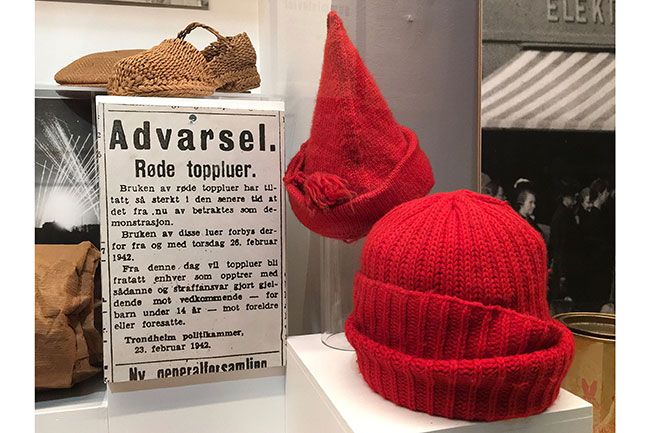
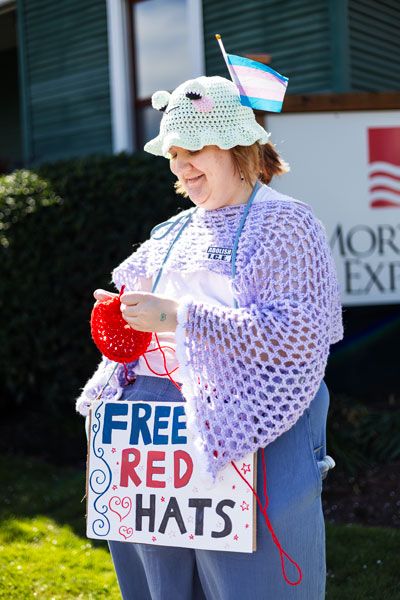
The recent crisis in Minneapolis answered the question. Always in the background but still readily identifiable in their hand-knit nisseluer and sensible Dale of Norway sweaters, the LBWs were omnipresent, leaving groceries on porches and running ad hoc school carpools throughout the troubles.
Wherever food and diaper banks sprang to life overnight, all seemingly spontaneous, without any discernible structure, I saw their work. And I knew how it happened.
I have every confidence that some bleak morning in January, a flock of LBWs watching the news entertained a single collective thought in their hive of minds: Our neighbors need help. People are hungry, and children need care. “We” can help. Not “someone” can help. “We” can.
So they did. And the rest is history.
They weren’t alone, of course, not by a long shot. Joined by a legion of those Minister Nadia Bolz-Weber calls “accidental saints,” the LBWs were simply one cohort in a phalanx of neighborly love.
Confronted with extraordinary events, thousands of average Minnesotans said, with a single voice, “*We* can help,” displaying a grace and compassion equal parts humbling and inspiring.
They showed what people of good faith, regardless of individual beliefs, can achieve with a unity of spirit. They loved their neighbors — no buts.
My grandmother and college pastors would have been proud.
We live in a world dominated more by profiles in vanity than courage, all too often led by those who choose barriers before neighbors. Yet we also live in a world of Minnesotans and Lutheran Basement Women and a million other “accidental saints,” even if sometimes their good works blend out of sight.
Embrace them. For while in adulthood I am a decidedly inconstant Lutheran, with an overlong list of that which I have done and left undone, I know this is most certainly true: We should love our neighbors, no buts.









Comments