


Leland Thoburn: A word about social justice and why it matters to us
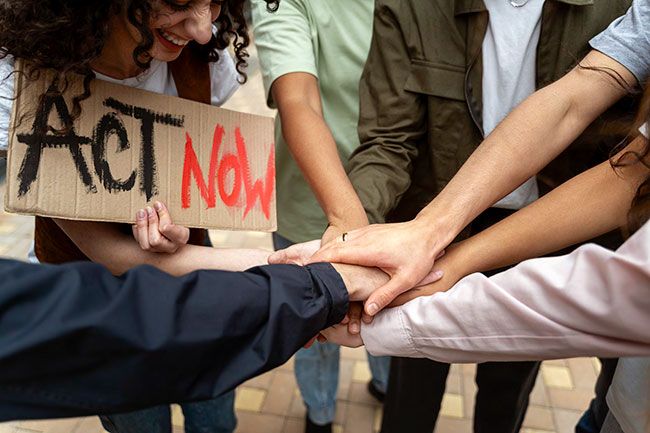

Today is the World Day of Social Justice. I’m sure many of you have been poised with your social justice party hats, dancing in anticipation of Feb. 20 rolling around again.
I thought I’d join in the festivities. But first, what exactly is meant by “social justice”?
Unfortunately, there is no universally agreed definition.
In a 2007 declaration, the United Nations created this day, stating social Justice was comprised of “poverty eradication and in promoting full employment and decent work, gender equality and access to social well-being and justice for all” as well as “respect for all human rights and fundamental freedoms.”
This is all well and good, if a bit vague. Let’s turn to Black’s Law Dictionary, which defines social justice this way:
“1. Justice that conforms to a moral principle, such as that all people are equal. 2. One or more equitable resolutions sought on behalf of individuals and communities who are disenfranchised, underrepresented or otherwise excluded from meaningful participation in legal, economic, cultural and social structures, with the ultimate goal of removing barriers to participation and effecting social change.”
The concept of “full employment” and “meaningful participation” have precedents in American history.
One hundred years ago, America was sailing blindly toward the Great Depression, like an economic Titanic en route to its destiny with an iceberg. Few could guess what was coming.
Advances in technology, as well as the development of the assembly line for mass production, enabled factories to crank out high volumes of modern miracles for the American consumer. Radios, refrigerators, toasters, automobiles, Victrolas and many other material delights contributed to a vastly increased standard of living.
But who was this ennobled consumer? It was the rich.
Factory owners ensured they could afford the latest marvels by beating down the cost of labor in their factories.
But that left the average factory worker unable to afford what he was producing. Thus, the market for these modern marvels was small, and production soon outpaced the ability of the market to consume, leading eventually to collapse.
The growth of labor unions, combined with the economic and educational assistance provided to veterans after World War II, lit the fuse for the greatest economic explosion in history. Like a sun forming from the implosion of interstellar gases, the middle class was born.
Incomes doubled. Home ownership increased by 20%. There was now a vast market of eager consumers for the goods that America was able to produce.
Every economic indicator began pointing upward. America was on her way toward the worldwide economic dominance she now enjoys.
Some people believe the address to social justice is through reparations or handouts of one sort or another. Certainly there are times people need help, but nowhere in history has socialist-style redistribution of wealth succeeded like the post-war boom in America. That was social justice applied on a national scale.
Economic systems are simply flows of goods and services, and cash, between and among people. The more people who participate, the greater the flow, and everyone benefits.
This is what happens when you invite and enable the underprivileged, the marginalized and the educationally deprived.
Seventy years ago, it was soldiers, blue-collar workers and their families. Today, it is minorities, women, immigrants and their families.
If we can further open the doors to their full participation, everybody will win.
America already does this better than most, but there is room for improvement. By proclaiming Feb. 20 World Day of Social Justice, the United Nations is trying to nudge the world further in that direction.








Comments