


Eric Schuck: Don’t let discordant notes mar symphony of the Fed
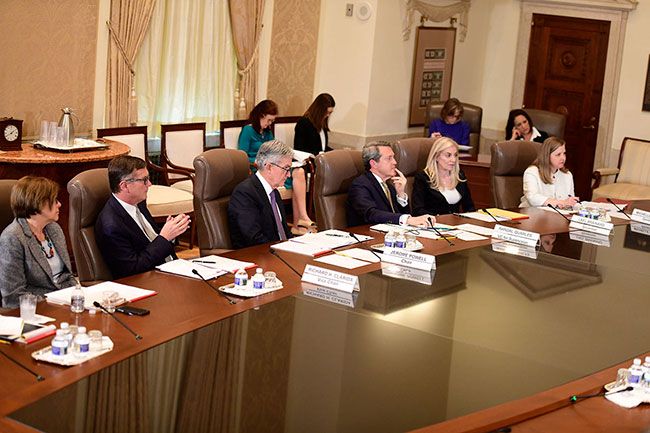
Unfortunately, “Schoolhouse Rock!” never covered the Federal Reserve.
Then again, if it had, it might not have made for terribly compelling TV. After all, the ideal song for monetary policy should be a lullaby — soft, calming and familiar, guaranteed to soothe and stabilize.
Truth be told, the soundtrack to banks should be boring. And the song of the Federal Reserve — the bank to the banks — should be the most boring of all.
In general, it is. For most of us, the Fed works so well that its melody seems blissfully distant in the background, and that’s no small accomplishment.
The Fed’s mission, codified in the Federal Reserve Reform Act of 1977, obligates it to promote “maximum employment, stable prices and moderate long-term interest rates.” But those goals frequently conflict, as increasing employment often requires lower interest rates while stable prices, meaning low inflation, generally necessitate higher interest rates.
Weaving together these potentially discordant harmonies simultaneously and continuously is possible only through constant cooperation and attention. The Fed’s leaders — its chair and vice chair; its Open Market Committee, which sets policy; and the presidents of the various regional Federal Reserve Banks — need the freedom to focus.
For over a century, this freedom has been the norm. The Federal Reserve Act of 1913 famously puts the Fed’s leadership appointments on a rhythm different from the U.S. election cycle, intentionally keeping the Fed outside politics.
For example, the Fed’s chair always has appointments running from the middle of one presidential term to the middle of the next, while the Fed’s governors serve 14-year terms — more than twice as long as the senators who confirm them!
That’s a good thing, as politicized central banks — think Argentina, Turkey and Zimbabwe — tend to facilitate environments for creating and sustaining hyperinflation. That the United States has not known this — ever — shows the wisdom of the current system.
Sadly, this is now under threat. That’s because the current administration seeks lower interest rates despite a very muddled and confusing economic picture.
While unemployment remains relatively low, job creation remains stubbornly flat. Additionally, inflation relative to wage gains — read affordability — continues at a painful level.
On balance, some data suggests minor interest rate cuts while other information points toward constant or even increasing rates. Under these circumstances, pushing the Federal Reserve to radically drop rates is almost like asking an orchestra to pick up the pace by adding a backbeat to a waltz.
Possible? Yes. Advisable? No.
More worrisome still, the administration seems willing to use unprecedented political tools to achieve this, threatening actions against Fed leadership of, to put it mildly, dubious validity.
Simply put, this cannot happen. Members of the Senate Banking Committee from both parties must make it amply clear, through their power to confirm the leadership of the Federal Reserve’s Board of Governors, that they will refuse to confirm any nominees failing to display a profound commitment to Fed independence.
At the same time, the presidents of the regional Federal Reserve Banks must make it clear through their votes on the Open Market Committee that, on behalf of the member banks they serve across the country, they will neither accept nor approve of political interference in the operations of the system, particularly if such decisions are contrary to economic conditions.
This message needs to be loud, clear and unequivocal. Doing anything less runs the risk of surrendering the sublime symphony of the Federal Reserve to a second-grade kazoo band committed to performing an off-time cover of “Pink Pony Club.” No one wants to hear that, and for the record, I respect Chappell Roan far too much to even contemplate such a travesty.








Comments